
The Light After the Darkness: Why I Founded Navi Nurses
Request CareThe Light After the Darkness: Why I Founded Navi Nurses
There is a Hindu word—anavi—that I stumbled across one night while sitting with a friend, trying to land on a name for this company I was building.
My friend was an ENT resident; we had worked a lot together over the years and often found ourselves throwing out ideas and dreaming about what healthcare could be. So, it was only natural that she and I were having this conversation.
Through this exchange of ideas, it was one word that stopped me cold, one word that would speak to everything I was trying to create with my new company.
Anavi: someone who is kind, compassionate, and often seen as the first ray of light after darkness.
I looked up at my friend and said, that’s it, that’s the name of my company. Because if there’s one word that can describe the heart of nursing, that’s it in a nutshell. I later took the “a” off to keep it to four letters, making it short and easy to remember, and Navi Nurses was born.
A Journey Rooted in Love and Loss
As so many nurses’ stories begin, mine starts at the bedside.
My grandmother was a patient at Mayo Clinic. That was where I first really “felt” healthcare and saw it for what it could be. The physician who walked into her room to tell our family that she had cancer is etched into my memory and my heart forever. He knelt on his knees at her bedside, held her hand, and spoke to her and us with a gentle kindness I’ll never forget.
It was the most extraordinary thing I had ever experienced. And that physician is now one of our most trusted advisors. He became part of this journey in a way I never could have predicted back then.
Witnessing that moment is what made me want to become a nurse. I had no idea what nurses actually did until I saw them firsthand, caring for my grandmother. I went to nursing school, came back, and eventually ended up working on the same floor where my grandmother had been a patient—even alongside the very same nurses who had taught my family how to care for her.
But I knew something most of my colleagues did not: what it felt like to be on the receiving side of healthcare, to be the family member of the patient. My grandmother had advanced head and neck cancer. She breathed through a hole in her neck. She “ate” through a tube in her belly. She was so sick. And because Medicare only covered a few hours of nursing care a week, everything fell to my family and me.
We were exhausted. We were terrified. And we spent a lot of time wondering whether we were doing something wrong, whether we were strong enough, or whether we were good enough to provide care for her. We were always afraid of hurting her. But there was nowhere to go for additional help when we needed it.
I carried a lot of shame from that time without even realizing it. When I became a nurse and started caring for patients myself, I realized very quickly that what I thought was unique to my family wasn’t unique at all.
A Question That Sparked Everything
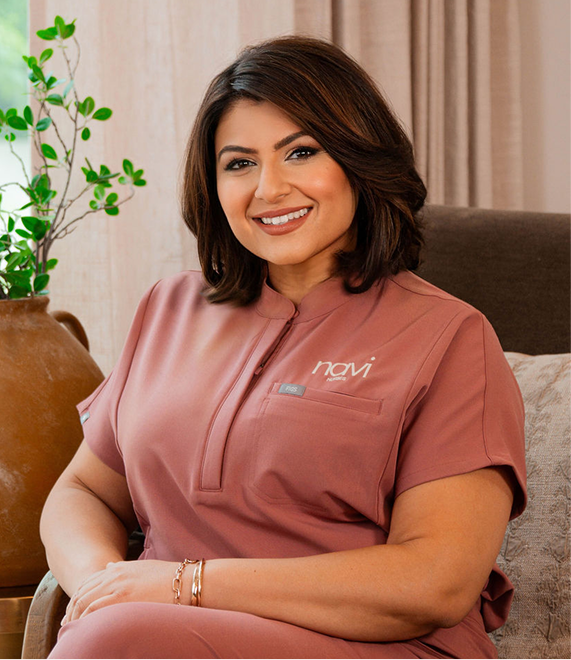
While I worked bedside, my patients would tug at my scrubs all the time and say, “Jasmine, will you come home with me? I’ll pay you to come take care of me at home.”
I would brush it off and laugh, but I was also genuinely asking myself: why is this not possible? Why can’t nurses who spend days learning a patient’s history and idiosyncrasies continue to care for them during the vulnerable transition back home?
I know for a fact that nurses at the bedside want to do more. But on a hospital floor, a nurse caring for four to five patients realistically may have only ten minutes per patient per hour. That is not enough time to truly provide the care patients require.
We are sending people home from the hospital now who are really, really sick, with incredibly complex needs. We are essentially expecting their families to become nurses overnight, which, as I experienced firsthand, is an impossible weight to carry.
It’s what started all of this. It’s what pushed me to build a company that hires nurses to provide concierge services to vulnerable members of our community, co-creating care alongside the people who need it most. Starting here in Arizona, yes, but eventually bringing this model to the entire nation, too.
The Dream I Could Not Let Go
I had started my PhD at ASU and taught an ASU 101 class for freshman to acquaint them with the university. I took my students to a Health Entrepreneurship and Leadership Lab and found myself captivated by a professor named Dr. Hall, who spoke for hours about innovations in healthcare. At the end, he said, “If anyone has any ideas, come talk to me.”
I looked around and figured my students would not take him up on his offer. I messaged him myself about my innovative business idea. A week later, I was sitting in his office, and he started lining up opportunities and ways to get things off the ground. Dr. Hall is still one of my greatest supporters and one of our advisors to this day.
Through his connections, I ended up attending the YesPHX startup week event while I was still working in the hospital I remember listening to a man named Andy talk about this venture-ready program, this big competition. I took a photo of the slide on my phone, but I had no idea what half of it meant. I remember thinking: I don’t know what that is, but I’m going to win it one day.
Then the pandemic hit.
My unit became a COVID unit. Since I’m an empath, I can tell you that every day felt like the worst day of my life. Every emotion—the most angry, the most sad, the most scared, all of it—overwhelmed my nervous system. I reached a point where I felt soul-crushed, and I truly didn’t know if I could be a nurse anymore.
It has taken me a long time to work through the grief of that period. But I also think those experiences are what finally pushed me to take the leap. Entrepreneurship never sounded so good. My options were either to take a travel nursing job and make a lot of money, or take this dream for a spin. Either way, I felt like I couldn’t lose. So I applied to the Arizona Commerce Authority Innovation Challenge, and the rest is history.
We won it on our first try, which isn’t the norm for most founders in the program.
What We Actually Want for Your Family
My big dream, the one I keep coming back to, is that everyone who leaves a hospital should have the opportunity to go home with a nurse who can get them set up for success in real time.
I want patients to be able to go home safely and actually be with their families. We want loved ones to be responsible for holding the patient’s hand, not for changing wound dressings. Family should get to do what only family can do—love one another, enjoy each other’s company, show up, be present.
That vision lives in every part of how we operate this company, starting with the culture we build internally. You cannot ask a nurse to show up with their whole heart for a client if they don’t feel seen and valued themselves. It all flows from the same energy.
When someone joins Navi—nurse or not—I want them to know this is a safe place where diversity is welcome and their voice matters. I want them to feel more empowered than they've ever felt before.
I want them to feel the magic of what we're building because, at the end of the day, we're all working towards it together. We each just have different jobs, different ways that we're getting there. But we can't do it unless we are all moving together with the same passion and the same commitment to each other and to the people we serve.
And What It Does for the Nurses
When I started Navi Nurses, I thought my main goal was improving patient outcomes. I did not anticipate—not in my wildest dreams—how much this work would impact nurses, too.
At the bedside, a nurse works a 12-hour shift that really ends up being about 13-14 hours on most days. You go home at the end of your shift and lie awake at night thinking through everything you did and didn’t do, like:
- The IV antibiotics you hung late because you were dealing with another more urgent matter
- Or the patient you forgot to go back to after promising you’d bring them another warm blanket
- Or the family member who left flustered because you didn’t have enough time to answer all their questions
That’s a pretty short list, honestly; there’s so much more I could say! The point is that nurses give everything they have to their work and still go home feeling like it wasn’t enough. If you work that way long enough, it starts to wear on you.
I lived that, too. Every nurse has lived that. It’s the difference that makes Navi so special to the nurses who work with us. We transformed the way nurses work, and it turns out that allowed them to fall in love with caring for people again.
When a Navi Nurse comes into a client’s home, they are there to provide care for ONE person and their family. They have the time to sit with their client, to notice small changes, to follow through on what they said they would do. That nurse walks out knowing they made a real difference in their client’s care because they had the time to do so.
Always a Nurse at Heart
When I look at where Navi Nurses is today, it is overwhelming in the most beautiful way. To see an idea come to life in this way and witness the profound impact it has on nurses, clients, and their families is something I can’t quite put into words.
I keep setting dreams and goals that keep getting bigger than I ever imagined when I started this journey. And I think that is exactly how it should be. I may have stepped out of my scrubs, but they will always be a part of me because I will always be a nurse at heart.
What I get to do now is operate from a place of making things better—for nurses, for patients, and for families. The ripples we're creating here can help transform our community and our nation into one that is so much more compassionate, more committed to one another, and more aware of the value each of us brings to the people around us every single day.
We are the first ray of light after darkness. And we are just getting started.