Family Caregivers Shouldn't Have to Be Nurses
Request CareWe Didn't Just Make Sister the Caregiver. We Made Her the Nurse.
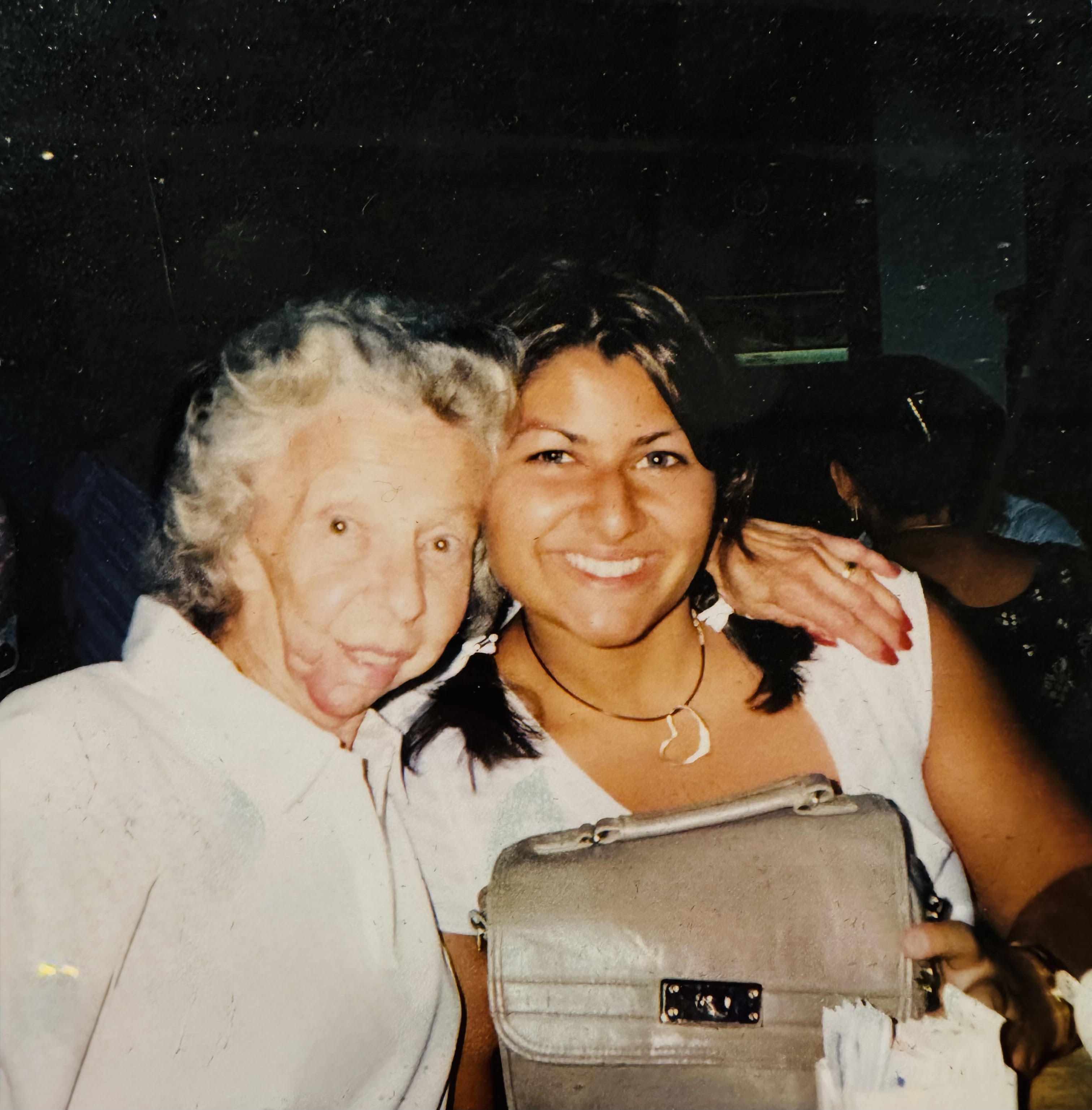
I was a college student the year I learned to care for a tracheostomy. My grandmother had been diagnosed with cancer, my parents had a newborn at home, and I was the eldest daughter. So I became her nurse at night. I suctioned her tracheostomy, managed her feeding tube, dressed her wounds, and then tried to show up for class the next morning. That year, I failed all my courses because I couldn't sleep. My story is not unique. About 5 million U.S. students in college or trade school are also family caregivers, AARP found, and 7 in 10 say it affects their academic performance.
As her caregiver, I was scared every single day: scared I'd miss something, scared I'd do something wrong, scared an emergency would hit and I wouldn't know what to do. Don't get me wrong, I would do it all again for her. But no one should have to learn nursing the way I did: alone, afraid, and on the job. Nobody called it nursing, though. I was just doing what we knew would make Grandma happy.
So when Saturday Night Live aired "Sister," a fake ad for a free, convenient, 24/7 elder-care system that turns out to be your sister, it resonated deeply.
It's true that caregiving lands hardest on women. Sociologist Angelina Grigoryeva's peer-reviewed research found that gender is the strongest predictor of how adult siblings divide care for aging parents: daughters provide more care than sons. But as a nurse, I see what the sketch left out, and it's the part that puts lives at risk.
We aren't just asking Sister to be a caregiver. We're asking her to be a nurse.
Caregiving vs. Nursing: Two Different Jobs
Those are different jobs. Caregiving is helping someone bathe, cooking meals, driving to appointments. Nursing is managing medical problems: managing medications with frequent changes and side effects, caring for wounds and tubes, recognizing the subtle signs of an impending emergency, knowing what to ask the doctor and what the answers mean, and more. It's hard even for those of us trained to do it. Yet AARP's Home Alone Revisited report found that about 20 million family caregivers perform medical and nursing tasks with little instruction. Most manage medications, more than a third handle wound care, and about half worry about making a mistake. Most say they feel they have no choice. We have quietly moved hospital-level work into living rooms and handed it to people with no training, no supervision and no relief.
The Hidden Cost for Family Caregivers
I see what that does to people every week. A son afraid that time off will cost him his career, which leaves his sister missing time with her own kids and barely sleeping, because every late-night buzz might be the call. A wife in her 70s who is putting off her own cancer treatment because she can't leave her husband with dementia alone. They rarely complain. Most of the time, they apologize for being tired and not being able to do it all.
The cost isn't only exhaustion, caregiver burnout or the toll on their own health. It's the relationship. The afternoons a daughter once spent talking with her father become afternoons spent checking his blood pressure and arguing about what he eats. She still loves him. She just rarely gets to simply be with him. Parents feel it too. Many tell me, "I never wanted to be a burden." I always tell them the same thing: needing care isn't a burden. Having your loved ones carry it alone is. And few want medical orders from their children. I'm a nurse, and I can barely get my own parents to follow their medical instructions. Yet they'll listen to another nurse.
Why Paying Family Caregivers Isn't Enough
The policy answer, so far, is to pay family caregivers. Believe me, I know they deserve every dollar. But a paycheck won't make Sister a nurse. It won't give her back her career, her sleep, or the years she spent as her father's medical aide instead of his daughter. And no paycheck can protect her health. Caregiving takes a real toll on the body. One in five family caregivers rates their own health as fair or poor, and more than 13 million struggle to care for their own health while caring for someone else, according to AARP's Caregiving in the US 2025 report. If payment is the whole solution, we haven't fixed the Sister system. We've put it on the payroll. That is the outcome I refuse to accept.
Preventive In-Home Nursing Visits Work
What would help is professional in-home nursing that arrives early, before the fall rather than after it. Johns Hopkins' CAPABLE program sends a registered nurse, an occupational therapist and a handyworker into the homes of low-income older adults. A 2021 review in the Journal of the American Geriatrics Society of six trials, covering more than 1,100 participants, found it improved people's ability to bathe, dress and manage daily tasks in every one. And a 2024 review in BMC Geriatrics found that preventive home visits cut the odds of hospital admission by about a quarter. A nurse who knows your father's baseline notices the new shuffle, the lingering cough, the confusion after a medication change, and calls his doctor before it becomes a 911 call. And for Sister, that means she no longer has to be the one watching for every sign. She can sleep through the night, keep her job, and look after her own health, knowing someone trained has her father covered.
In full disclosure, I run a business that provides these check-ins, and that work shows me every day what families are up against. People deserve to know what I see, so I'll be honest about the limits. A 2024 meta-analysis in Heliyon found that home-based programs for frail older adults didn't reduce hospital admissions, and CAPABLE's gains faded within a year without follow-up. Private duty nursing is also out of reach for many families, and qualified nurses are hard to find.
Still, the math is hard to ignore. A weekly hour-long nurse visit costs a small fraction of a private nursing home room, which runs a median of $129,575 a year, according to the CareScout Cost of Care Survey. No family should have to figure this out alone.
What Medicare Should Cover
Here is one concrete step. Medicare pays for care management that nurses often deliver, but only when a physician or nurse practitioner bills for it. A registered nurse can't bill Medicare directly for a preventive check-in at home. Medicare should create billing codes for routine preventive in-home nursing visits for older adults at risk of decline, building on what programs like CAPABLE have shown. Those codes should cover visits in person, not just by video. Older adults need human connection, and they deserve someone who walks through their home and makes sure it's safe. Medicare has already taken a first step. Its GUIDE model, launched in July 2024, pays for dementia care navigators, a 24/7 support line, caregiver training and up to $2,500 a year in respite care. It's a promising start, but it covers only people with dementia, only through participating programs, and it doesn't guarantee routine nursing check-ins. Today, our system mostly pays for care after something goes wrong. It should pay to keep things from going wrong.
Have the Conversation This Holiday Season
Changing what Medicare pays for will take years, and your parents may not have that long. So don't wait for Washington. This holiday season, many of us will sit at the same table as our parents and siblings. Use it. Ask Mom or Dad what they want if their health changes. Decide who holds the medical power of attorney. Agree on how the work and the cost will be shared, so it doesn't all land on whoever lives closest, or whoever happens to be a daughter. And then thank the person who has been carrying the most. They may not have heard it in a long time.
Have that conversation with your eyes open. My family knew what we were taking on when we brought my grandmother home. We just thought there would be more help. We thought home health meant a nurse every day. We were wrong. No one talks about those gaps, and there's shame in not being able to do it all. But you deserve to know the truth before you sit down at that table: what's covered today is far from adequate. Medicare's home health benefit covers only intermittent skilled care, not a nurse at the bedside every day. Here's how private duty nursing compares to traditional home health.
I became my grandmother's makeshift nurse that year because she needed more than what Medicare allowed. That experience is what inspired me to become a nurse. And that college granddaughter, who just wanted to sit with her grandmother and talk, is why I'm speaking up now. Love shouldn't require a nursing license. Let nurses do the nursing, so Sister can just be Sister again.